Best Entry Hall Flooring Options (2026)
The entry hall floor works harder than any other surface in your home. It is the first thing wet shoes hit, the spot where grit gets ground in, and the floor guests notice within two seconds of walking in. Pick the wrong material and you are looking at scratches, water stains, or cracked grout inside a year. Pick the right one and it still looks sharp a decade later. This guide breaks down every realistic option, what it costs, and how to choose based on your climate and traffic.
Why the entryway is the hardest floor to get right
Most rooms deal with one type of wear. The entry deals with all of them at once. Rain and snowmelt drip off coats and boots. Sand and road grit act like sandpaper underfoot. Heavy items — furniture on moving day, dropped hardware — hit the surface. And it happens at the highest traffic point in the house. A material that is perfect in a living room can fail badly at the door, which is why “what looks nice” is the wrong first question. The right first question is “what survives water, grit, and constant traffic while staying safe when wet?”
What makes a good entryway floor
- Water resistance. Melting snow and rain arrive at the door first. Low-absorption materials like porcelain and vinyl resist staining and swelling.
- Scratch and dent resistance. Grit is abrasive. Harder surfaces keep their finish longer.
- Slip resistance when wet. A glossy floor at a wet entry is a genuine hazard. Look for matte or textured finishes and a higher slip rating (COF).
- Easy cleaning. You will mop this floor more than any other, so avoid materials that need special cleaners or constant resealing.
- Repairability. Tile lets you replace a single cracked piece; sheet materials may need a full section redone.
The best entryway flooring options, compared in depth
Porcelain tile — the best all-rounder
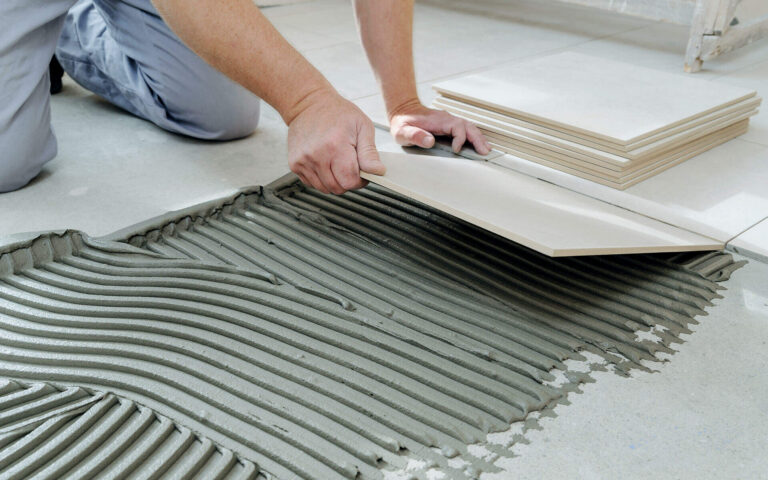
Porcelain is denser and less porous than ceramic, which makes it nearly waterproof and extremely hard-wearing. It resists scratches, handles heavy traffic, and comes in styles that convincingly mimic wood, marble, or concrete. Choose a matte or textured finish for grip, and use a low-absorption (below 0.5%) porcelain for cold climates so trapped moisture cannot freeze and crack it. The trade-offs: it is hard and cold underfoot, and the grout lines need sealing to stay clean. For most U.S. entryways, porcelain is the smartest long-term choice.
Luxury vinyl plank (LVP) — the best value
LVP is fully waterproof, warmer and softer underfoot than tile, and easy to install with click-lock systems. It is the budget favorite for good reason. The limits: it can dent under very heavy furniture and scratch if you drag grit across it, so a walk-off mat is essential. Choose a thicker wear layer (20 mil or more) for a high-traffic entry rather than the cheapest builder-grade product.
Natural stone — premium look, higher maintenance
Slate, travertine, granite, and marble all bring a high-end feel. But stone is porous and needs periodic sealing, and marble in particular is vulnerable to etching from the salt tracked in during winter. Honed (matte) stone is far safer underfoot than polished. Reserve stone for mild climates or covered entries, and commit to a resealing schedule.
Hardwood and engineered wood — warm but risky
Solid and engineered wood give an entry warmth that tile cannot match, but water is their enemy. Standing moisture warps boards and lifts finish. If you love the look, engineered wood handles humidity swings better than solid, seal the edges thoroughly, and place a large mat right at the threshold. In a snowy climate, think twice.
How to choose, step by step
- Start with your climate. Cold and snowy: porcelain or LVP. Mild and dry: stone or wood become viable.
- Match traffic to durability. Busy family entry: porcelain or thick LVP. Formal, low-use foyer: more freedom to prioritize looks.
- Check slip safety. Wherever water lands, choose matte or textured finishes.
- Plan for a walk-off zone. A mat that catches grit and water protects whatever floor you choose and extends its life.
- Budget for prep, not just the material. Subfloor leveling and the right underlayment matter more than the tile’s price.
Common mistakes to avoid
- Choosing a polished, slippery surface at a wet entry.
- Skipping the walk-off mat and letting grit scratch the finish.
- Installing over an unprepared or flexing subfloor, which cracks tile and grout.
- Using high-absorption tile in a freezing climate.
- Buying the cheapest LVP for a high-traffic door and watching it dent within months.
How much does entryway flooring cost?
Installed cost depends on the material and your prep work. The table below shows typical 2026 ranges to help you budget.
Frequently asked questions
What is the most durable entryway flooring?
Porcelain tile is the most durable common option. It resists water, scratches, and heavy traffic, and a single cracked tile can be replaced without redoing the floor.
Is vinyl plank good for an entryway?
Yes. LVP is waterproof, comfortable underfoot, and affordable. For a busy door, choose a thicker wear layer and add a mat to protect against grit.
Can I use hardwood in an entryway?
You can, but it is the riskiest choice because water damages wood. Engineered wood handles moisture better than solid, and sealed edges plus a large mat are essential — especially in snowy climates.
How do I stop my entry floor from getting slippery?
Use a matte or textured finish, keep a walk-off mat at the door, and wipe up tracked-in water promptly. Avoid high-gloss tile and polished stone at the entry.
Entryway Flooring Cost by Material (2026)
Below are typical installed price ranges (material + labor) for entryway and foyer flooring in the U.S. Entryways need durable, high-traffic-rated surfaces, so porcelain, stone, and hardwood are common choices. Figures are 2026 estimates and vary by region, subfloor condition, and layout complexity.
| Material | Installed Cost / sq ft | Best for entryways? |
|---|---|---|
| Luxury Vinyl Plank (LVP) | $4 – $9 | Good — waterproof, budget |
| Ceramic tile | $5 – $12 | Good — easy clean |
| Engineered hardwood | $6 – $14 | Fair — seal edges |
| Porcelain tile | $7 – $16 | Best — hardest wearing |
| Solid hardwood | $8 – $18 | Fair — refinishable |
| Natural stone (marble/slate/travertine) | $12 – $25 | Premium — seal for moisture |
Estimated installed ranges, 2026. A typical entryway/mudroom tile job runs about $500–$2,000. Sources: This Old House — Tile Flooring Cost, industry installer averages.
Planning, Cost, and Resource Dynamics
The economic reality of high-end design involves prioritizing the “invisible” weatherproofing labor over the visible surface materials.
| Resource Category | Cost Driver | Complexity Index |
| Substrate Precision | Engineering reliability | High |
| Membrane Sourcing | Environmental fidelity | High |
| Site Documentation | Planning accuracy | High |
| Floor Finish | Aesthetic material grade | Moderate |
Investment should follow the utility. Prioritize the time spent in the planning phase. These are the elements that provide system reliability. A reduction in luxury-grade decorative stone to accommodate a more thorough, engineering-heavy planning phase is almost always a superior strategy for maintaining project value, a practice fundamental to determining the best entry hall flooring options.
Tools, Strategies, and Support Systems
The successful specification of a project relies on a range of analytical tools utilized by the professional:
Integrated Submittal Logs: Maintaining a centralized, date-stamped record of all moisture-sensitive material specifications.
Phased Site Verification: Conducting critical-point inspections during the construction phase to ensure the floor build aligns with performance specs.
Component-Level Degradation Audits: Calculating the performance requirements of every sealer to ensure consistency across the entire residence.
The Risk Landscape: Identifying Compounding Failures
The failure of a modern flooring system is rarely a sudden event. It is the accumulation of systemic oversights that occur in the design phase.
Dimensional Mismatch and Compounding Risks
Dimensional mismatch occurs when floor thickness does not match the exterior threshold. This leads to costly and invasive site modifications. The “invisible” thermal conflict also remains common. High-end projects often place excessive interior humidity against a cold concrete slab. This process leads to localized condensation and eventual finish failure.
Adhesive Incompatibility
Adhesive incompatibility represents the cumulative effect of choosing high-fidelity floor materials. These options do not communicate properly with existing surface finishes or moisture barriers. Such chemical mismatches inevitably compromise the structural integrity of the entire assembly.
Governance, Maintenance, and Long-Term Adaptation
A high-functioning entry floor is a technical asset that requires formal management.
Establishing Maintenance Protocols
-
Periodic Integrity Checks: Measuring air-sealing and surface permeability levels annually accounts for normal building settling over time.
-
Sealant Validation: Inspecting mechanical barriers and edge connections for signs of excess wear or material degradation every 24 months.
-
Adjustment Triggers: Establishing clear thresholds for mechanical function, such as when pressure-boundary performance drops below the design baseline, requiring immediate resealing or re-grouting.
Measurement, Performance Signals, and Evaluation
Success in modern design is measured by the silence and reliability of the operation.
-
Leading Indicators: The ease of cleaning during daily use, the complete absence of stains or rot, and the perfect alignment of every transition path.
-
Lagging Indicators: The total lack of service-related repairs, and the longevity of the moisture-barrier modules and control drivers.
-
Qualitative Signals: The subjective sense of a responsive space, where the layout supports intended links without moisture-pressure issues.
Industry Misconceptions and Structural Oversimplifications
-
The “Hardness-Is-Durability” Fallacy: The belief that harder stones or tiles are always better. In reality, brittle materials crack under settling, often requiring more maintenance than resilient choices.
-
Extraction Over-Optimization: Attempting to hide every single joint often leads to a floor that feels “flat” and devoid of necessary visual texture or expansion capacity.
-
The “Sealant-Fixes-All” Myth: Sealant is useful but cannot fix a fundamentally flawed, porous material choice.
-
Hardware Neglect: Viewing transition strips as secondary. In high-performance systems, the mechanical control elements at the threshold are the primary determinants of the user experience.
Ethical, Practical, and Contextual Considerations
The ethical dimension of architectural design lies in the longevity of the built environment. Creating systems that require constant, energy-intensive repair is inherently wasteful. By choosing designs that prioritize natural durability and ease of maintenance, architects and owners demonstrate a commitment to both fiscal and environmental responsibility. This approach ensures that the home remains a sustainable asset, capable of serving future generations without becoming a source of systemic stress.
Conclusion
Further Reading & Sources
- This Old House — renovation cost guides and how-tos.
- National Association of Home Builders (NAHB) — construction standards and cost trends.
- U.S. Dept. of Energy — Energy Saver — insulation and efficiency guidance.