How to Plan Foyer Lighting on a Budget: Cost Guide (2026)
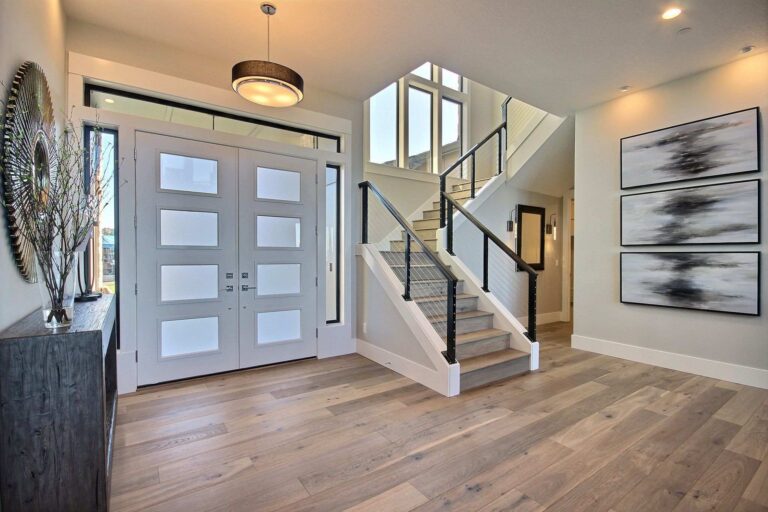
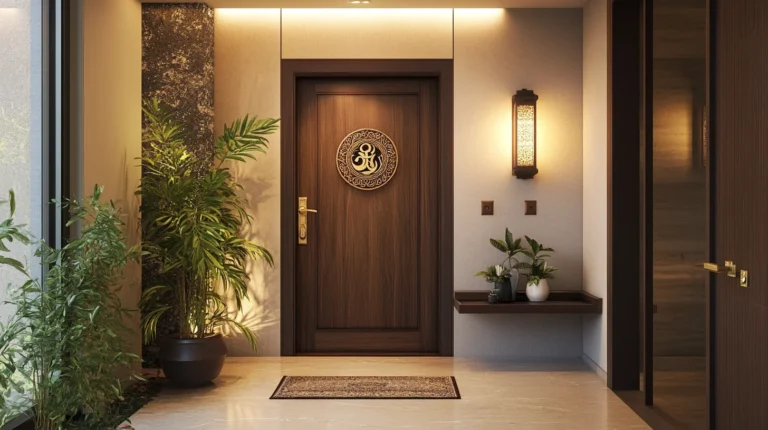
Lighting sets the entire mood of an entry, and it is one of the highest-impact upgrades per dollar. You do not need an expensive chandelier to make a foyer feel warm and welcoming. Here is how to plan foyer lighting that looks great on a budget.
What good foyer lighting does
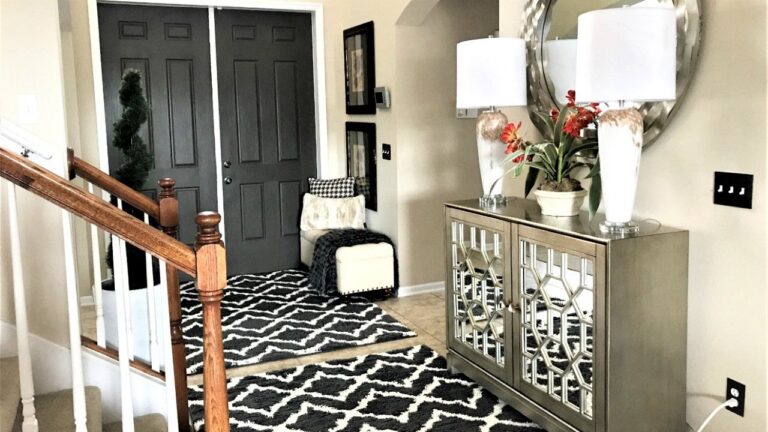
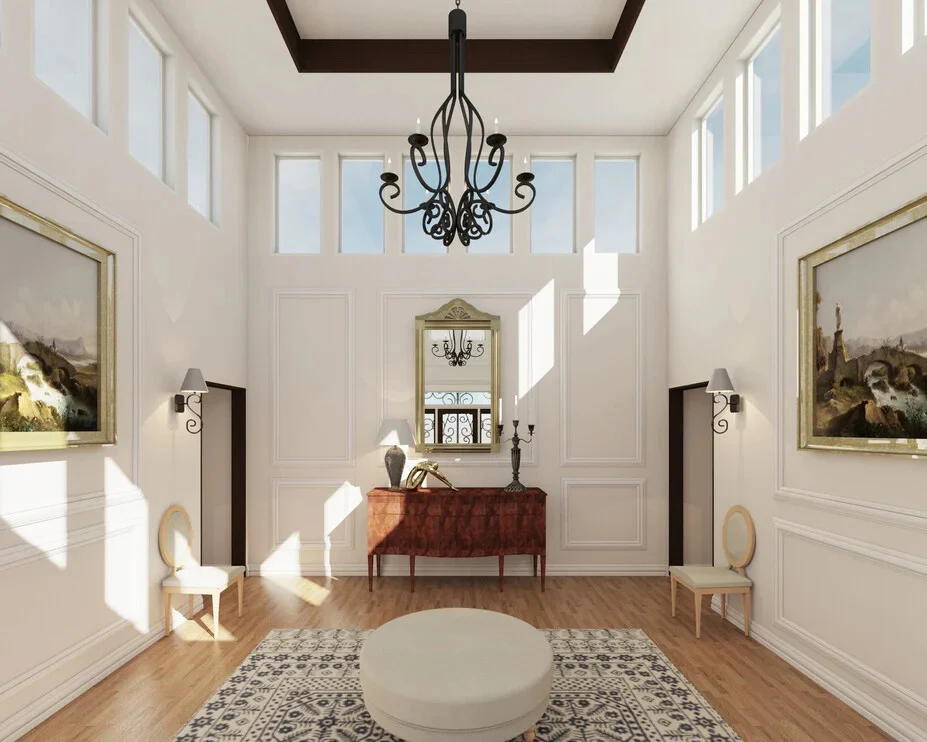
An entry needs enough light to feel safe and welcoming, plus a fixture that suits the ceiling height and style. The goal is layered, even light — not a single dim bulb or a fixture too small for the space. Good lighting makes the whole entry look more finished, even with modest materials elsewhere.
Budget-friendly lighting choices
- Flush or semi-flush mount. For standard ceilings, a modern flush mount gives clean, even light at a low price.
- Single pendant. A well-chosen pendant adds style without the cost of a multi-light chandelier.
- LED retrofit. Swapping to LED cuts energy use and gives better, longer-lasting light.
- Wall sconces. A pair of sconces adds warmth and layering cheaply, great beside a mirror.
- Dimmer switch. An inexpensive dimmer lets one fixture set multiple moods.
Plan it step by step
- Measure ceiling height — it dictates fixture type and size.
- Pick a fixture proportional to the space (too small looks lost).
- Layer light: overhead plus a sconce or lamp for depth.
- Choose warm LED bulbs (2700–3000K) for a welcoming tone.
- Add a dimmer for flexibility.
Common lighting mistakes
- A fixture too small for the space, which looks like an afterthought.
- Harsh, cool-white bulbs that feel clinical.
- One dim source with no layering.
- Overspending on a chandelier when a pendant would do.
Cost reference
Fixture plus installation drives the cost; high ceilings raise labor. See the 2026 ranges below.
Frequently asked questions
How much light does a foyer need?
Enough for safe, welcoming, even illumination — usually a proportional overhead fixture plus a secondary light source for depth.
Do I need a chandelier in the entry?
No. A modern flush mount or single pendant looks great for far less, especially in a standard-height entry.
What bulb color is best for a foyer?
Warm white (2700–3000K) creates the most welcoming feel. Avoid harsh cool-white bulbs at the entry.
Entryway Lighting & Chandelier Cost (2026)
Foyer lighting cost depends on fixture price plus installation — and high ceilings raise labor significantly because of scaffolding or lift requirements. Typical 2026 ranges in the U.S.:
| Scenario | Typical Cost |
|---|---|
| Standard chandelier install (8–10 ft ceiling) | $150 – $750 |
| Foyer install, high ceiling (13–19 ft) | $500 – $1,250 |
| Luxury / oversized fixture | $1,500 – $12,000+ |
Estimated ranges, 2026. High ceilings add labor for lifts/scaffolding. Sources: modern lighting installer guides, U.S. electrician averages.
Planning, Cost, and Resource Dynamics
The economic reality of high-end design involves prioritizing the “invisible” logistics labor over the visible fixture finishes.
| Resource Category | Cost Driver | Complexity Index |
| Supply Chain Precision | Engineering reliability | High |
| Inventory Sourcing | Architectural fidelity | High |
| Site Documentation | Planning accuracy | High |
| Light Finish | Aesthetic fixture grade | Moderate |
Investment should follow the utility. Prioritize the time spent in the planning phase. These are the elements that provide system reliability. A reduction in luxury-grade decorative metalwork to accommodate a more thorough, engineering-heavy planning phase is almost always a superior strategy for maintaining project value, a practice fundamental to determining how to plan foyer lighting on a budget.
Tools, Strategies, and Support Systems
The successful specification of a project relies on a range of analytical tools utilized by the professional:
-
Luminosity Mapping: Creating a digital 3D model of the site to identify potential contrast bottlenecks before finalizing the fixture plan.
-
Integrated Submittal Logs: Maintaining a centralized, date-stamped record of all hardware specifications to avoid ordering errors.
-
Phased Site Verification: Conducting critical-point inspections during the fixture arrival phase to ensure the build aligns with the performance specs.
-
Fixture-Level Degradation Audits: Calculating the heat-dissipation requirements of every driver to ensure consistency across the entire project duration.
The Risk Landscape: Identifying Compounding Failures
The failure of a modern lighting system is rarely a sudden event. It is the accumulation of systemic oversights that occur in the design phase.
Dimensional Mismatch and Compounding Risks
Dimensional mismatch occurs when fixture dimensions do not match the structural plenum. This leads to costly and invasive site modifications. The “invisible” fiscal conflict also remains common. High-end projects often place excessive funds into premium fixtures that are then damaged by poor storage on-site. This process leads to localized financial failure.
Hardware Compatibility
Hardware incompatibility represents the cumulative effect of choosing high-fidelity fixtures without considering the nature of the control system. These options do not communicate properly with existing dimmers or smart-home bridges. Such chemical mismatches inevitably compromise the structural integrity of the entire assembly, necessitating expensive repairs.
Governance, Maintenance, and Long-Term Adaptation
A high-functioning lighting system is a technical asset that requires formal management.
Establishing Maintenance Protocols
-
Periodic Integrity Checks: Measuring contrast-ratio reliability levels annually accounts for normal market volatility over time.
-
Supplier Validation: Inspecting mechanical and logistical partners for signs of excess wear or capacity degradation every 24 months.
-
Adjustment Triggers: Establishing clear thresholds for mechanical function, such as when project variance drops below the design baseline, requiring immediate re-evaluation of the lighting chain.
Measurement, Performance Signals, and Evaluation
Success in modern design is measured by the silence and reliability of the operation.
-
Leading Indicators: The ease of interaction during daily use, the complete absence of glare, and the perfect alignment of every light order path.
-
Lagging Indicators: The total lack of service-related repairs, and the longevity of the control modules and logistics drivers.
-
Qualitative Signals: The subjective sense of a responsive space, where the layout supports intended functionality without light-pressure issues.
Industry Misconceptions and Structural Oversimplifications
-
The “Lowest-Bid-Wins” Fallacy: The belief that taking the lowest bid is always the best financial choice. In reality, the lowest bid often excludes the “hidden” logistical costs that inevitably arise.
-
Extraction Over-Optimization: Attempting to hide every single component often leads to a room that feels “flat” and devoid of necessary visual texture or structural capacity.
-
The “Discount-Fixes-All” Myth: Discounting is useful but cannot fix a fundamentally flawed, porous design choice.
-
Hardware Neglect: Viewing light-source controls as secondary. In high-performance systems, the mechanical control elements are the primary determinants of the long-term value.
Ethical, Practical, and Contextual Considerations
The ethical dimension of architectural design lies in the longevity of the built environment. Creating systems that require constant, energy-intensive repair is inherently wasteful. By choosing designs that prioritize natural durability and ease of maintenance, architects and owners demonstrate a commitment to both fiscal and environmental responsibility. This approach ensures that the home remains a sustainable asset, capable of serving future generations without becoming a source of systemic stress or financial decline.
Conclusion
Further Reading & Sources
- This Old House — renovation cost guides and how-tos.
- National Association of Home Builders (NAHB) — construction standards and cost trends.
- U.S. Dept. of Energy — Energy Saver — insulation and efficiency guidance.